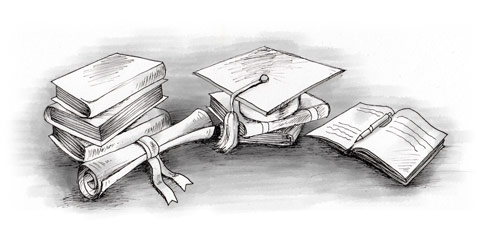
There’s a wide range of private schools in Spain, including parochial schools, bilingual schools, international schools and a variety of foreign schools. Around a third of children in Spain are educated at private school. Most private schools are co-educational, Catholic day schools, although a number of schools take weekly or term boarders.
Your choice of foreign schools depends on where you live in Spain. There’s a good choice of English-speaking schools (accepting children from 3 to 18) in Barcelona, Madrid, Palma de Mallorca, Tenerife and on the costas. For example, there are British schools in Alicante, Barcelona, Cadiz, Fuengirola, Ibiza, Lanzarote, Las Palmas, Madrid, Menorca, Palma de Mallorca, Marbella, Tenerife, Torremolinos and Valencia. In other cities and areas, there may be only one English-speaking school or none at all. There are also French, German, Swedish and other foreign-language schools in Spain. Under Spanish law, all foreign schools must be approved by their country’s embassy in Spain. Like state schools, most private schools operate a five-day, Monday to Friday timetable, with no Saturday morning classes.
Private schools teach a variety of syllabi, including the British GCSE and A Level examinations, the American High School Diploma and college entrance examinations (e.g. ACT, SAT, achievement tests and AP exams), the International Baccalaureate (IB) and the Spanish bachillerato. However, most Spanish private schools, i.e. schools teaching wholly in Spanish, are state-subsidised and follow the Spanish state-school curriculum. Some international schools are also subsidised and follow a totally bilingual (English/Spanish) curriculum and are authorised to accept Spanish pupils. They must teach the Spanish curriculum, including primary and secondary education, and the bachillerato.
They provide the opportunity for children to become completely bilingual and to choose between a Spanish and English-language university or career. To receive state subsidies and accept Spanish pupils, 25 per cent of a school’s total number of pupils must be Spanish and at least 20 per cent in each class. As a condition of receiving government funding, schools with Spanish pupils are subject to inspection by the Spanish school authorities. Many international private schools have mixed Spanish and foreign student bodies, e.g. one-third American or British students, one-third Spanish and one-third other nationalities, although they may be called American or British.
Private school fees vary considerably according to, among other things, the quality, reputation and location of a school, but are generally low compared with those of private schools in northern Europe and North America. Not surprisingly, schools in Madrid and Barcelona are among the most expensive. Fees don’t usually include registration, books, materials, laundry, insurance, extra-curricular activities, excursions, meals and transport (most private schools provide school buses. Most private schools subscribe to insurance schemes covering accidents, in school and during school-sponsored activities. Some schools award scholarships or offer grants to parents with low incomes.
Private foreign and international schools usually have a more relaxed, less rigid regime and curriculum than Spanish state schools. They provide a more varied and international approach to sport, culture and art, and a wider choice of academic subjects. Many also provide English-language summer school programmes combining academic lessons with sports, arts and crafts, and other extra-curricular activities. Their aim is the development of a child as an individual and the encouragement of his unique talents, rather than teaching on a production-line system. This is made possible by small classes, which allow teachers to provide pupils with individually-tailored lessons and tuition.
The results are self-evident and many private secondary schools have a near 100 per cent university placement rate. On the other hand, one of the major problems of private foreign-language education in Spain is that children can grow up in cultural ‘ghettos’ and be ‘illiterate’ as far as the Spanish language and culture are concerned. Although attending a private school may be advantageous from an academic viewpoint, integration into Spanish society can be severely restricted.
You should make applications to private schools as far in advance as possible, as many international schools have waiting lists for places. You’re usually requested to send school reports, exam results and other records. Before enrolling your child in a private school, make sure that you understand the withdrawal conditions in the school contract.
To help you choose an appropriate private school for your child(ren), you should ask the following questions:
How long has the school been established?
Does it have a good reputation?
Does the school have a good academic record? For example, what percentage of pupils obtain good examination passes and go on to good universities? All the best schools provide exam pass-rate statistics.
What does the curriculum include? What examinations are set? Are examinations recognised in Spain and internationally? Do they fit in with your child’s long-term education plans? Ask to see a typical pupil’s timetable to check the ratio of academic to non-academic subjects. Check the number of free study periods and whether they’re supervised.
What languages does the school teach as obligatory or optional subjects?
Are intensive English or Spanish lessons provided for children who don’t meet the required standard?
What are the facilities for art and science subjects, e.g. arts and crafts, music, computer studies, biology, science, hobbies, drama, cookery and photography? Ask to see the classrooms, facilities, equipment and pupils’ projects.
What religion(s) are taught?
How large are the classes and what’s the pupil/teacher ratio? Does the stated class size tally with the number of desks in the classrooms?
What are the classrooms like? Check their size, space, cleanliness, lighting, furniture and furnishings. Are there signs of creative teaching, e.g. wall charts, maps, posters and pupils’ work on display?
What are the qualification requirements for teachers? What nationalities are the majority of teachers? Ask for a list of the teaching staff and their qualifications.
What is the teacher turnover? A high teacher turnover is a particularly bad sign and usually suggests poorly paid teachers and/or poor working conditions.
Which countries do most pupils come from?
What is the pupil turnover?
What are the school hours?
What are the school terms and holiday periods? Private school holidays are usually longer than state schools’ (e.g. four weeks at Easter and Christmas and ten weeks in summer) and they often don’t coincide with state school holiday periods.
Is transport provided to and from school and for extra-curricular activities?
What sports instruction and facilities are provided? Where are the sports facilities?
What sort of excursions and supervised school holidays are organised?
What is the quality and variety of food provided? What is the dining room like? Does the school have a dietician?
What standard and type of accommodation is provided (in the case of a boarding school)?
What medical facilities does the school provide, e.g. infirmary, resident doctor or nurse? Is medical and accident insurance included in the fees?
What kinds of punishment are applied and for what offences?
What reports are provided for parents and how often?
What are the withdrawal conditions, should you need or wish to remove your child? A term’s notice is usual.
What are the fees?
What extras must you pay? For example, are lunches, art supplies, sports equipment, excursions, clothing, health and accident insurance, text books and stationery included in fees? Some schools charge extra for every little thing.
It’s advisable to check whether a school is recognised by the Spanish education authorities and whether it belongs to an accredited organisation. Most British schools in Spain belong to the National Association of British Schools in Spain (NABSS, http://www.nabss.org ), whose members are visited and approved by British school inspectors. Advice about British schools in Spain can be obtained from the British Council, Paseo Martínez Campos, 31, 28010 Madrid (913-373 500, http://www.britishcouncil.org/spain ) or from the European Council of International Schools/ECIS (UK 01730-268244, http://www.ecis.org ). Information is also obtainable from embassies in Spain.
Before making a final choice, it’s important to visit the schools on your shortlist during term time and talk to teachers and pupils (if possible, also speak to former pupils and their parents). Where possible, check the answers to the above questions in person and don’t rely on a school’s prospectus or director to provide the information. If you’re unhappy with the answers, look elsewhere.
Finally, having made your choice, monitor your child’s progress and listen to his complaints. Compare notes with other parents. If something doesn’t seem right, try to establish whether the complaint is founded or not; if it is, take action to have the problem resolved. Never forget that you (or your employers) are paying a lot of money for your child’s education and you should ensure that you receive good value.
Blinklist |
Bloglines |
Del.icio.us |
Digg |
Diigo |
Facebook |
Furl |
Google |
Ma.gnolia |
Mr.Wong |
Netvouz |
Simply |
Spurl |
StumbleUpon |
Technorati |
Yahoo |